
7 Powerful Personal Branding Tips for Students to Stand Out in 2026
Table of Contents
ToggleWhy Personal Branding Tips for Students Matter in 2026?
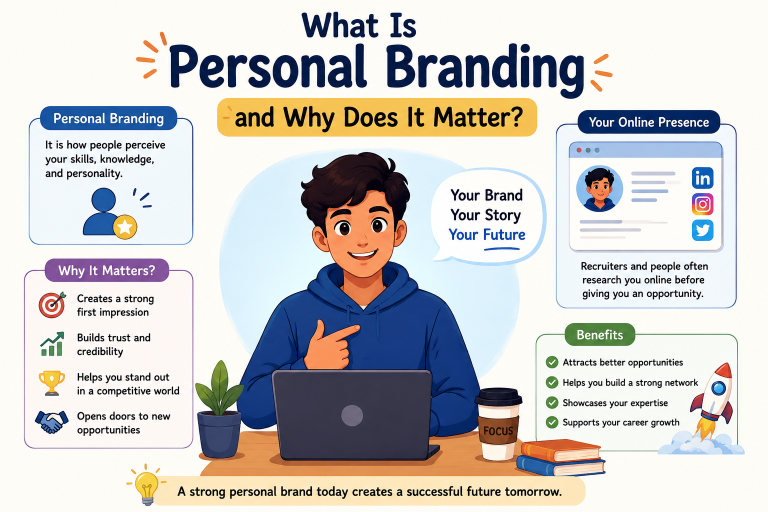
Many students believe personal branding is only important for influencers or business owners. In reality, personal branding for students is becoming one of the most valuable career-building strategies in today’s competitive job market and SEO-driven online world. A personal brand is how people perceive your skills, knowledge, and professional identity both online and offline. Before inviting candidates for interviews, many recruiters check LinkedIn profiles, portfolios, and online activity, often influenced by SEO visibility and online presence. Building a strong personal brand helps you create a positive first impression and stand out from other applicants who have similar qualifications.
Create a Professional Online Presence with Personal Branding Tips for Students
The first step in personal branding for students is creating a professional online presence. Start by optimizing your LinkedIn profile with a clear profile picture, an engaging headline, and a detailed summary of your skills and achievements. If possible, create a personal website where you can showcase your projects, certifications, and experiences. Using the same professional image and consistent information across different platforms helps establish credibility and makes it easier for people to recognize your brand.
Share Your Learning Journey Online
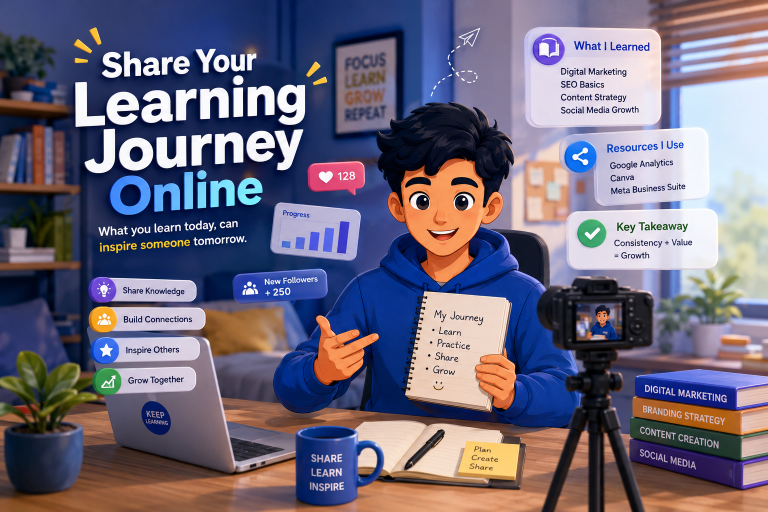
You do not need years of experience to start building your brand. One of the best ways to grow your visibility is by sharing your learning journey. Post about new skills you are developing, courses you have completed, industry trends you are exploring, or lessons learned from projects. This approach demonstrates curiosity, dedication, and continuous improvement. When students consistently share valuable insights, they gradually build authority within their chosen field and attract opportunities that align with their interests.
Build a Portfolio That Shows Real Skills
A strong portfolio can often speak louder than a resume. Employers want proof that you can apply your knowledge in practical situations. Include academic projects, freelance work, personal initiatives, case studies, or volunteer experiences that demonstrate your abilities. Whether you are interested in digital marketing, web development, graphic design, or content creation, showcasing real work strengthens your personal branding for students strategy and gives recruiters confidence in your capabilities.
Network With Industry Professionals
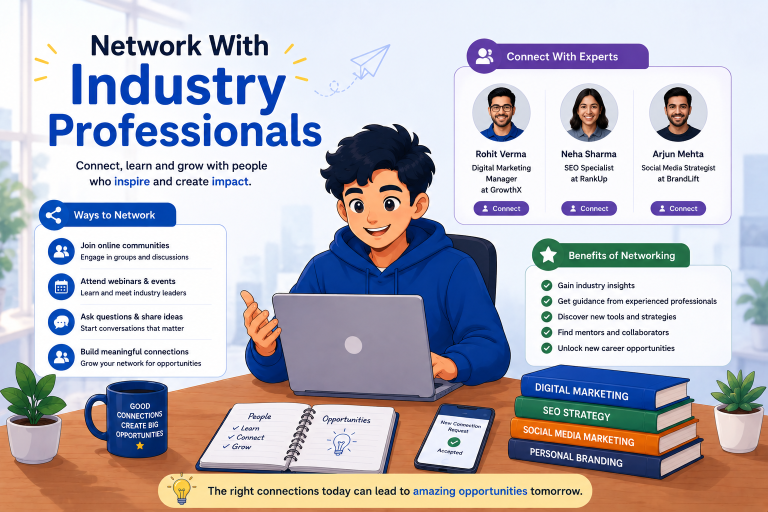
Networking plays a significant role in Personal Branding Tips for Students and career growth. Connecting with professionals on LinkedIn, participating in webinars, attending workshops, and engaging in industry discussions can help expand your opportunities. Meaningful networking in Personal Branding Tips for Students is not about asking for jobs immediately. Instead, focus on learning from experienced professionals, contributing to conversations, and building genuine relationships. Over time, these connections in your Personal Branding Tips for Students journey can lead to mentorship, internships, collaborations, and career opportunities.
Personal Branding Tips for Students Through Content Creation

Creating content is one of the fastest ways to establish a personal brand. You can write blog posts, create videos, share industry insights, or publish case studies related to your field. Consistent content demonstrates expertise and keeps your profile active. It also helps potential employers understand your interests and knowledge. Even simple posts discussing what you learned from a project can contribute significantly to your personal brand and professional reputation.
Consistency Is the Key to Personal Branding
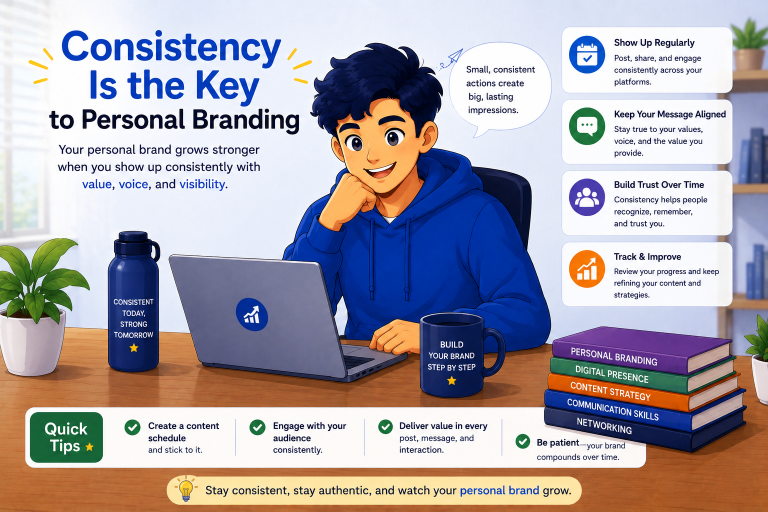
Building Personal Branding Tips for Students does not happen overnight. Success in Personal Branding Tips for Students comes from consistently presenting yourself as a professional who is eager to learn and grow. Regularly update your profiles, add new projects to your portfolio, share valuable content, and engage with your network. Consistency in Personal Branding Tips for Students helps build trust and ensures that your online presence accurately reflects your skills and ambitions. Students who remain active and focused in their Personal Branding Tips for Students journey are more likely to gain recognition over time.
Common Personal Branding Mistakes Students Should Avoid
Many students unknowingly make mistakes that weaken their personal brand. Some create profiles but never update them, while others share content that does not align with their career goals. Copying another person’s style instead of developing an authentic voice can also reduce credibility. Another common mistake is failing to showcase real work. Avoiding these issues can help strengthen your personal branding for students efforts and create a more professional image.
How Personal Branding Can Open Career Opportunities
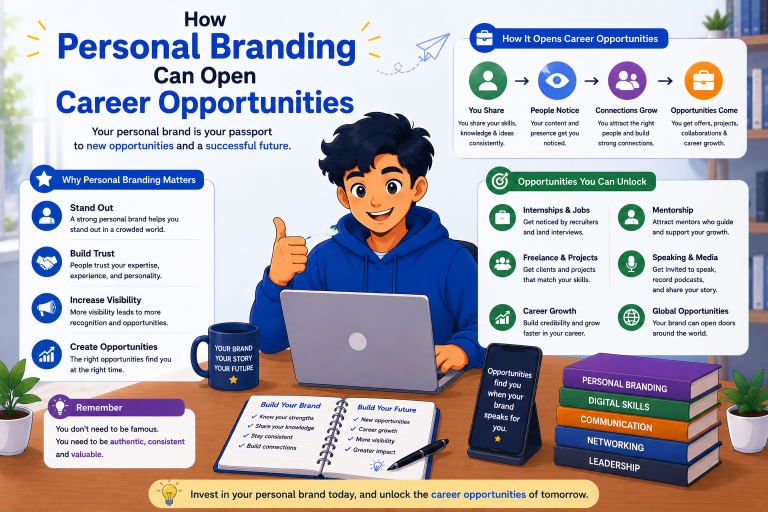
A strong personal brand can create opportunities even before you complete your education. Recruiters, clients, and industry professionals often discover talented students through their online presence on platforms like LinkedIn and Instagram. A well-maintained portfolio, active LinkedIn profile, and consistent content can lead to internships, freelance projects, networking opportunities, and full-time job offers. Personal branding allows students to demonstrate their value beyond academic qualifications and showcase their practical abilities.
TOOLS
PURPOSE
BEST FOR
Frequently Asked Questions
1.Why are real projects important for digital marketing students?
Real projects help digital marketing students apply theoretical knowledge in practical situations. They provide hands-on experience with SEO, content marketing, social media management, and analytics, making students more job-ready.
2.Do employers value real projects more than certifications?
Many employers consider real-world experience more valuable because it demonstrates practical skills and problem-solving abilities. Certifications can support a resume, but projects show how candidates apply their knowledge.
3.What types of digital marketing projects should students work on?
Students can create blogs, manage social media pages, run SEO campaigns, build websites, create content strategies, or work on freelance projects to gain practical experience.
4.How can digital marketing projects improve a student’s career?
Digital marketing projects help students build a portfolio, gain confidence, develop industry-relevant skills, and improve their chances of securing internships and full-time job opportunities.
5.Can I start digital marketing projects without professional experience?
Yes. Students can create personal websites, start blogs, optimize content for search engines, and manage social media campaigns to gain experience before entering the workforce.
Conclusion
In today’s digital world, personal branding for students is no longer optional. It is a powerful way to highlight your skills, build professional relationships, and increase your visibility among employers. By following these personal branding tips for students such as creating a professional online presence, sharing your learning journey, building a portfolio, networking with industry professionals, and remaining consistent, you can develop a personal brand that supports your career goals. Starting early gives you a significant advantage and helps you stand out long before you apply for your first job. These personal branding tips for students can help build credibility, improve online visibility, and create better career opportunities in 2026 and beyond.